
What We Do
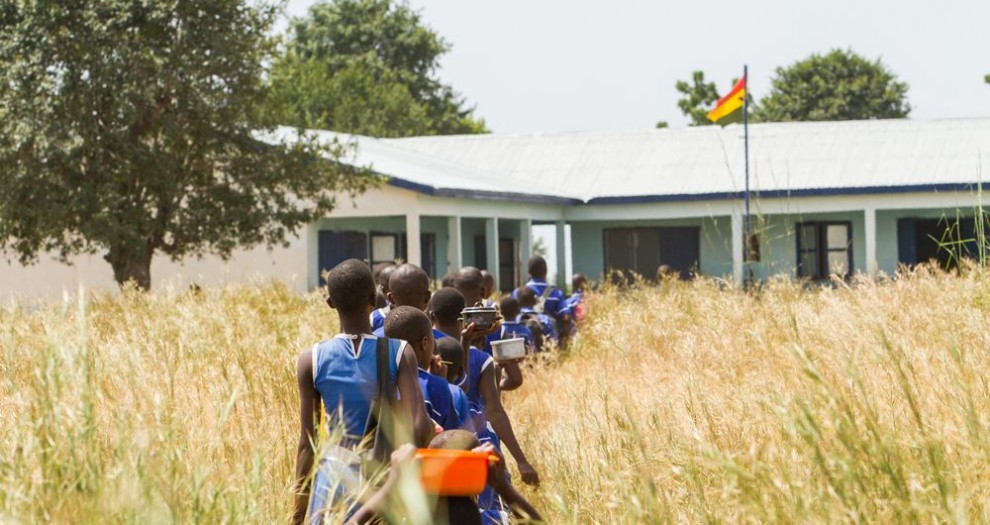
The Savannah Education Trust provides an education for some of the poorest children in West Africa through the provision of Christian schools in northern Ghana. In communities as poor as these, the purpose of education is not necessarily to improve job opportunities but (over time) to improve the quality of life.
The education is focused both on traditional subjects like literacy, as well as on practical skills like hygiene and farming.
Research shows that a primary education has a direct benefit on crop yields in subsistence farming. The rate of children surviving childhood and infancy increases dramatically when the mother has received even a basic education.
Our Programmes
We have three connected programmes: building schools, feeding pupils and training teachers.
The Need
Many rural African children live in desperate poverty. While Ghana’s economy has experienced growth over the last decade, there has been little change in the levels of poverty in the northern regions.
A survey by the charity ActionAid around the time that the Trust was established suggested that one out of every two children in northern Ghana did not attend an infant school. Research by Care International indicates that in Lawra district (the area where the Trust is working) “about 78% of the people can be classified as illiterate and only 5% of the over 11 year olds have been to primary school.”
These bare statistics hide a difficult and harsh everyday existence for village children like Mperismer. During the dry season, children can often go several days without food. Simply to survive, they have to scavenge for mice, rats or birds to eat.
Child poverty in urban areas is more visible and, within minutes of arriving in an African city a child is likely to tug your sleeve or knock on your vehicle window. Behind the vast numbers of youthful trinket sellers, shoe cleaners or beggars there are often stories of rural poverty.
Many children will have been driven with their families from the countryside. They arrive in the city with next to nothing. Without education or vocational skills, they have few choices. They are essentially trapped.
The syllabus that is being used in our Savannah schools is designed to be helpful to these rural children. A basic education gives children knowledge of simple improvements that can be made to rural life, for example in agricultural techniques and hygiene. It helps to meet the needs of all their family.
Why Education?
The aim of the Trust is to provide a basic education. In communities as poor as these villages, the main aim of education is over time to improve quality of life and not simply to improve employment opportunities.
The education focuses on more than the traditional subjects like maths and literacy. It also aims to equip the pupils with practical skills like hygiene and education.
Research shows that a primary education has a direct benefit on crop yields in subsistence farming. The rate of children surviving childhood and infancy increase dramatically when the mother has received even a basic education. It is a thrilling experience to visit villages where the charity has been working for a number of years and to see the transformative effect on the whole community.
We are able to provide scholarships for a number of the children at our schools to continue their education beyond the age of 14.
Our Story
Children of Savannah is a short film telling the story of Abu, and way in which Savannah Education Trust aims to help children like him – giving a good introduction to our work.
10th Anniversary Publication
In recognition of the 10th anniversary of the launch of the charity in 2005, we created an account of the story of the Savannah Education Trust. We did so with a deep sense of gratitude to God as we look back over our first decade.
Download the publication here (4.7MB). Printed copies are available on request, free of charge.